
 Colombia
 México
 Italia
 Francia
 Alemania
💪 20-Minute Home Routine: The Realistic Path to Daily Well-Being
The Challenge of Finding Time for Yourself
In the fast-paced rhythm of modern life, lack of time has become the number one excuse for neglecting our physical health. Between work responsibilities, household chores, and family commitments, dedicating an hour to the gym seems like an unattainable luxury. However, well-being should not be a privilege for those with empty schedules, but an accessible tool for everyone.
Sedentary behavior and accumulated stress not only affect our physical condition but also diminish our mental energy and concentration. Many people fall into the 'all or nothing' trap: if they can't train intensely for sixty minutes, they prefer to do nothing. This is where the 20-minute home routine becomes a powerful, realistic, and, above all, sustainable long-term solution.
Why 20 Minutes is Enough to Transform Your Day
There is a common misconception that to see results in our health, we need exhausting exercise sessions. The science of well-being tells us otherwise: consistency outweighs sporadic intensity. A short home workout that is done regularly can significantly improve cardiovascular health, strengthen muscles, and, most importantly, release endorphins that combat everyday stress.
Implementing a short fitness routine is not about seeking a radical physical transformation in a week, but about building a habit that makes you feel better about yourself. By reducing the entry barrier to just twenty minutes, we eliminate the mental resistance that fatigue generates. It is much easier to convince the brain to move a little before starting the day or upon arriving home than to plan a trip to the gym.
The Mindset of Progress, Not Perfection
For a routine to work, we must move away from the unrealistic standards often seen on social media. You don't need brand-name clothing, a huge space, or professional weights. All you need is the intention to dedicate a moment to yourself. This practical approach allows exercise to stop being a heavy obligation and become an act of self-care.
How to Prepare Your Environment for Success
Before starting your 20-minute home routine, it is essential to prepare the ground to avoid distractions. You don't need a dedicated exercise room; a small corner in the living room or even next to your bed is sufficient.
- Clear the area: Make sure you have space to extend your arms and legs without hitting furniture.
- Hydration at hand: Always have a water bottle nearby to take small sips during breaks.
- Comfortable clothing: It doesn't have to be technical, just allow you to move freely.
- No notifications: Put your phone on 'do not disturb' mode. These 20 minutes are exclusively for your well-being.
Practical Routine to Start Today
This routine is designed for anyone, regardless of their current fitness level. The goal is to mobilize the body comprehensively, improving flexibility and functional strength.
Phase 1: Dynamic Warm-Up (5 minutes)
The goal is to prepare the joints and slightly raise the body temperature.
- Joint Rotations: Make gentle circles with your neck, shoulders, wrists, and ankles (1 minute).
- Marching in Place: Walk in place, rhythmically raising your knees (2 minutes).
- Arm Openings: Open and close your arms as if you were going to give a hug, expanding your chest (2 minutes).
Phase 2: Mobility and Strength Circuit (10 minutes)
Perform each exercise for 40 seconds, followed by 20 seconds of rest. Repeat the circuit twice.
- Controlled Squats: Lower your hips as if you were going to sit in an invisible chair, keeping your back straight. Don't seek speed; seek control.
- Wall or Floor Push-Ups: If you are a beginner, place your hands on a wall and perform the push-up. If you feel comfortable, do it on the floor with your knees down.
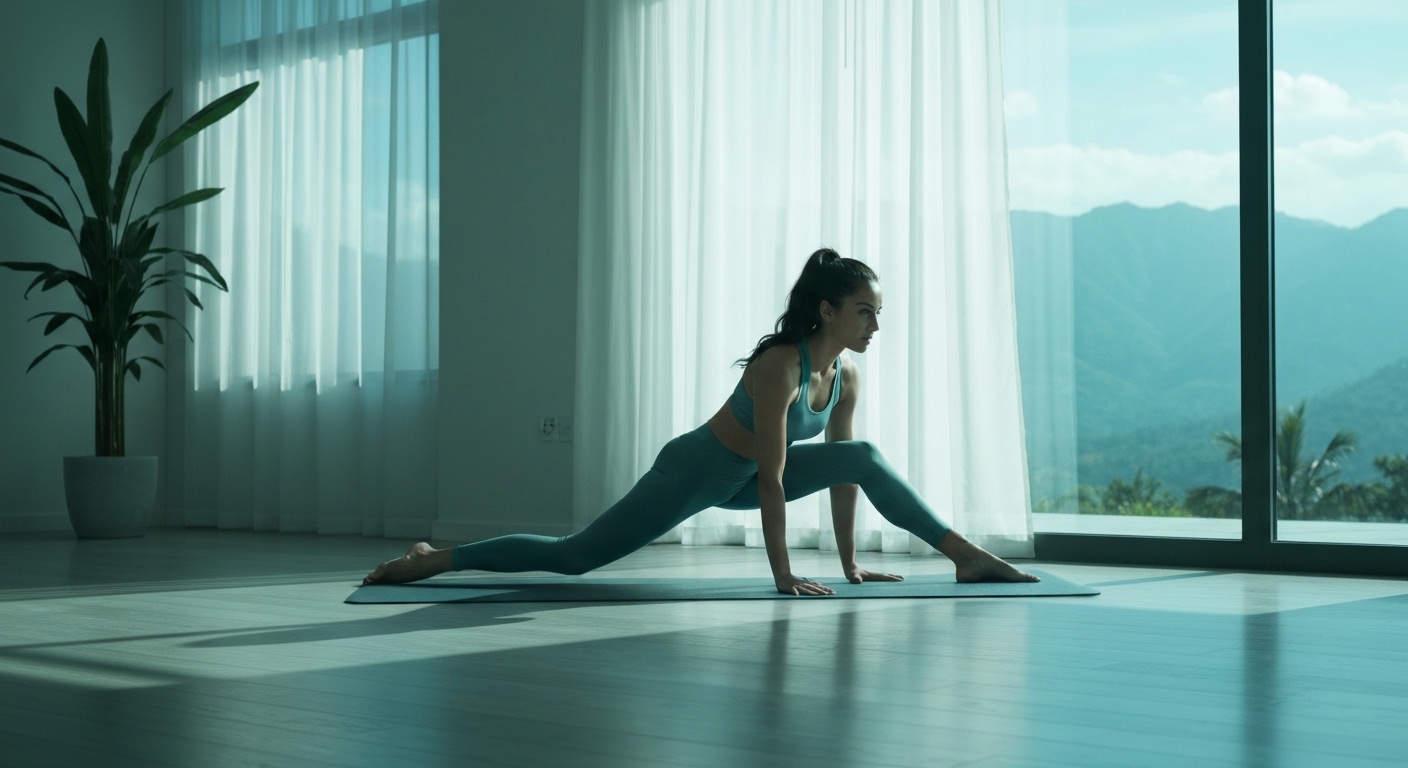
- Alternating Lunges: Step forward and lower your back knee slightly. Maintain balance and return to the starting position.
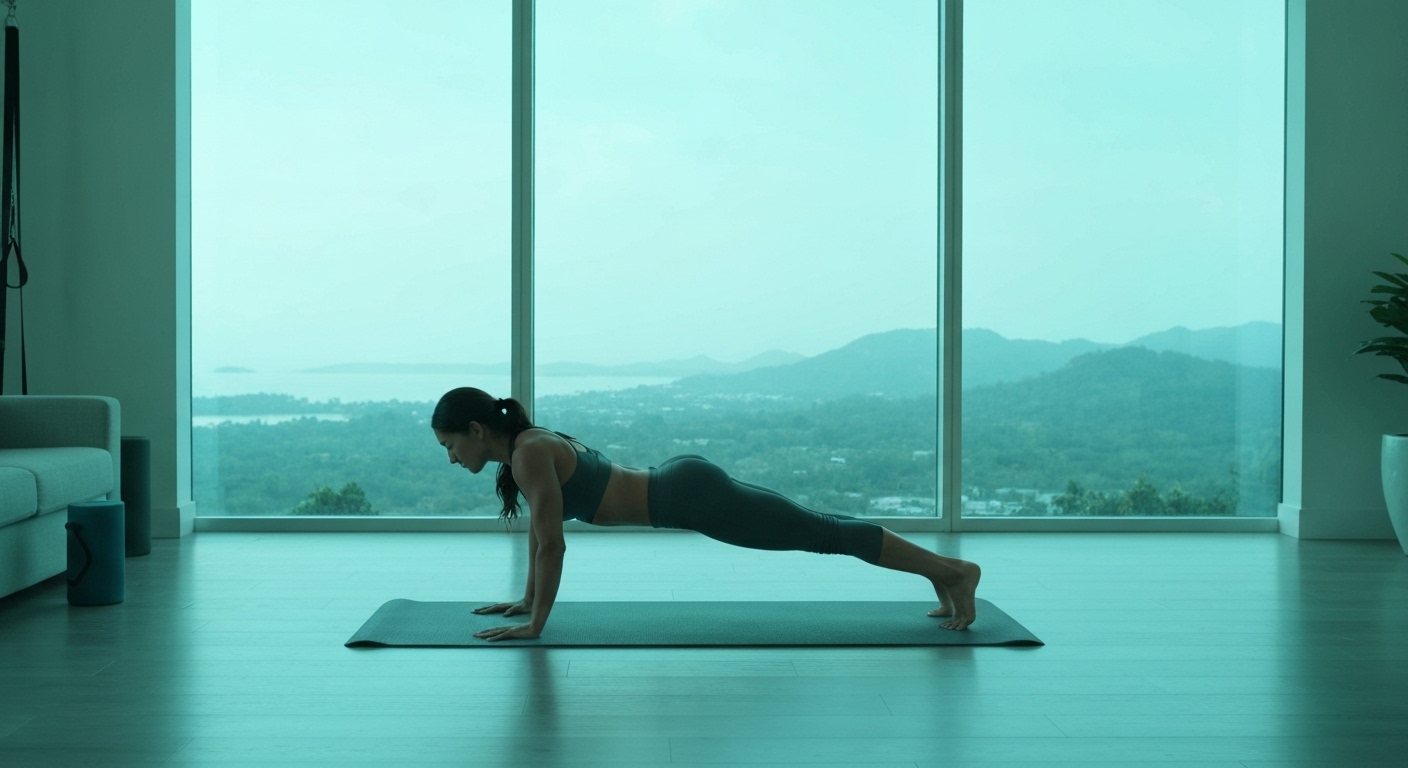
- Plank (Core): Support your forearms and toes (or knees), keeping your body aligned. Feel the activation of your abdomen.
- Heel Raises: Stand on your toes and lower slowly to strengthen your calves and improve balance.
Phase 3: Cool Down and Stretching (5 minutes)
It is vital to cool down to reduce heart rate and relax the muscles.
- Back Stretch: Gently lean your torso forward or perform the 'cat-cow' pose if you are on the floor.
- Leg Stretch: Gently stretch your quadriceps and hamstrings, holding each position for 20 seconds.
- Mindful Breathing: Close your eyes and take five deep breaths, inhaling through your nose and exhaling through your mouth, thanking yourself for this dedicated time.
Overcoming Common Obstacles
Even with a quick workout, there will be days when motivation wanes. The secret is not to wait until you feel like it, but to trust in the discipline of habit. If one day you feel particularly tired, don't cancel the routine; simply reduce it to 10 minutes of gentle stretching. The important thing is not to break the chain of consistency.
Remember that well-being is a marathon, not a sprint. Listen to your body: if you feel pain (not fatigue, but sharp pain), stop. The goal is to finish the routine feeling more energized than when you started, not exhausted or injured.
Integrating Movement into Your Lifestyle
A 20-minute home routine is the central pillar, but you can enhance its effects with small daily changes. Opting for stairs instead of the elevator, walking while talking on the phone, or getting up from your chair every hour to stretch your legs are actions that add up at the end of the day. Real well-being arises from the sum of these small conscious decisions.
Explore more health tips in our articles on mindful eating, sleep hygiene, and stress management to complement your physical activity.
Frequently Asked Questions (FAQ)
1. Is it really effective to do only 20 minutes of exercise?
Yes. For beginners and people with a sedentary lifestyle, 20 minutes of consistent activity is enough to improve metabolic health, mood, and joint mobility without the risk of overtraining.
2. Do I need to buy weights or special equipment?
No, it is not necessary. This routine uses your own body weight. You can use everyday objects like water bottles if you want to add minimal resistance in the future, but the main thing is to master the natural movement of the body.
3. What is the best time of day to train at home?
The best time is when you can do it consistently. Some people prefer the morning to activate their energy, while others prefer the afternoon to release work stress. Ideally, it should fit your chronotype and schedule.
Activa tu bienestar hoy
Empieza con una rutina sencilla y construye el hábito paso a paso.