
 Colombia
 México
 Italia
 Francia
 Alemania
🌿 Exercises to Reduce Stress: A Gentle Movement Guide at Home
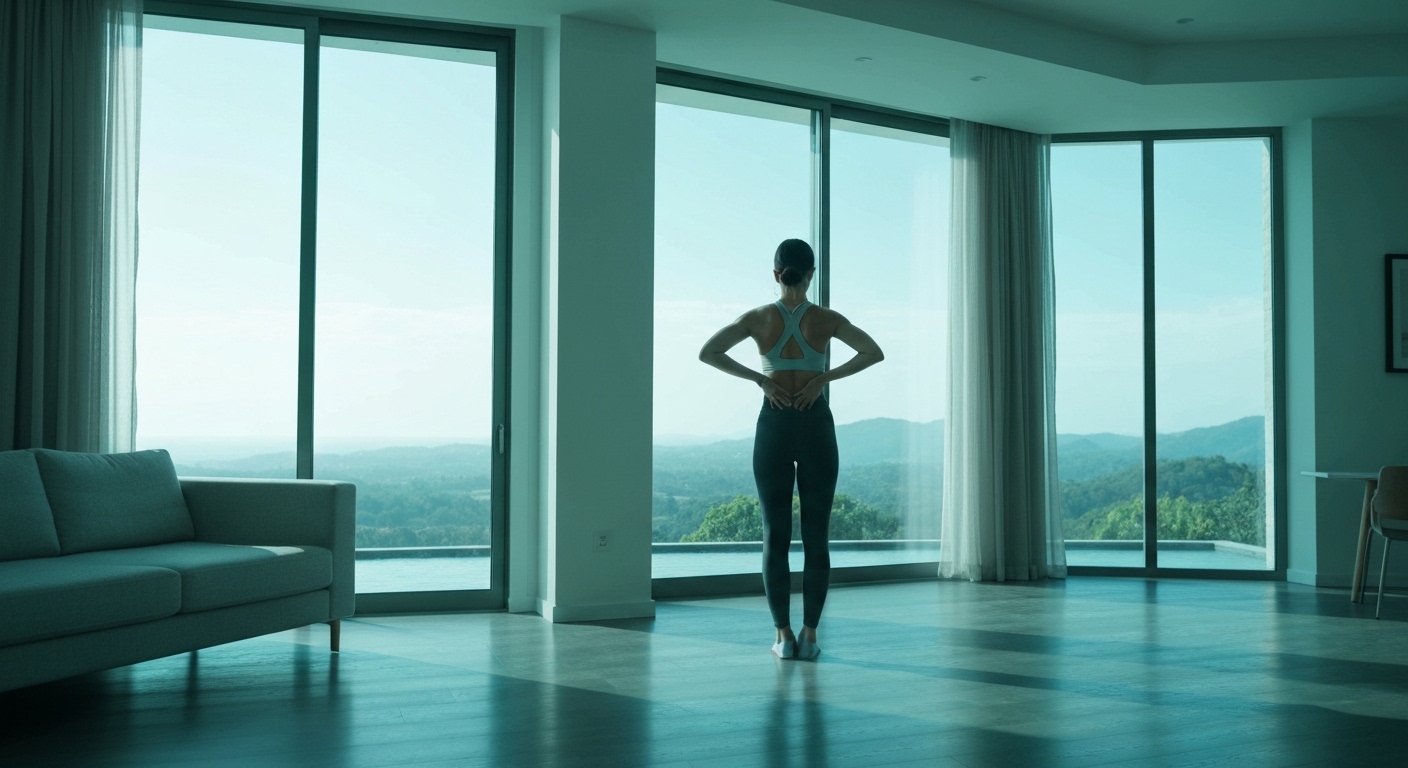
The Invisible Weight: Why We Need to Move to Free the Mind
You reach the end of the day and feel like your shoulders are up to your ears. Your jaw is tight and your mind keeps going over that never-ending to-do list. Stress is not just a mental sensation; it is a physical burden that accumulates in our muscles, our breathing, and our nervous system. Often, we think that to combat this exhaustion we need intense exercise routines that leave us exhausted, but the reality is quite different. When the body is already under pressure, what it needs most is kindness and exercises to reduce stress that promote calm instead of adding more fatigue.
Sedentary lifestyles and digital overstimulation have disconnected us from our bodily sensations. We spend hours in front of screens, adopting postures that close the chest and tense the neck. This immobility tells our brain that we are in a constant state of alert. Therefore, mental well-being is not achieved only through passive rest (like watching TV), but through active relaxation and gentle movement. These allow the nervous system to shift from a 'fight or flight' state to 'rest and recovery'.
The Myth of Extreme Effort
There is a belief that if you don't sweat or feel pain, the exercise isn't working. However, when we talk about emotional health, the goal is not to burn calories, but to release tension. Gentle exercises act as a bridge that reconnects your mind with your body, allowing you to process the day's emotions in a healthy and sustainable way. You don't need expensive equipment or an hour free; you just need the intention to dedicate a few quality minutes to yourself.
Benefits of Gentle Movement in Your Daily Life
Incorporating low-intensity routines has a profound impact on our quality of life. By performing slow and mindful movements, we are practicing a form of moving meditation. Some of the most notable benefits include:
- Reduction of Muscle Tension: By stretching and mobilizing the joints, we release the points where stress tends to 'store', such as the lower back and neck.
- Improvement of Breathing: Gentle movement is often accompanied by deep breaths, which better oxygenate the brain and immediately reduce anxiety.
- Regulation of Sleep: By lowering cortisol levels (the stress hormone) before sleeping, we facilitate deeper and more restorative rest.
- Increased Body Awareness: You learn to identify tension signals before they turn into chronic pain.
Practical Routine to Start Today
This routine is designed to be done in any corner of your home, without the need for special sportswear or prior experience. The goal is to feel better at the end than you did at the beginning.
Phase 1: Warm-Up and Awareness (5 minutes)
Start standing or sitting with your back straight. Close your eyes for a moment and simply notice how you are breathing. Don't try to change it, just observe it.
- Neck Circles: Lower your chin to your chest and make very slow circles to one side and then the other. Imagine you are drawing the circle with the tip of your nose.
- Shoulder Rolls: Raise your shoulders to your ears as you inhale and drop them suddenly as you exhale. Repeat 5 times. Then, make wide circles backward.
- Chest Opening: Interlace your hands behind your back and gently stretch your arms, opening your heart towards the ceiling. Breathe deeply here.
Phase 2: Main Active Relaxation Movement (15 minutes)
Perform these movements smoothly, without forcing any position.
- Cat-Cow Pose: Get on all fours (hands and knees). As you inhale, gently arch your back and look forward (cow). As you exhale, round your back like a hissing cat, bringing your gaze to your navel. Repeat 10 times at your breathing rhythm.
- Side Stretch: Sitting cross-legged, place your right hand on the floor and extend your left arm over your head, leaning to the right. Feel how your entire side opens up. Hold for 5 breaths and switch sides.
- Modified Forward Bend: Standing, slightly bend your knees and let your torso fall forward, allowing your arms and head to hang heavily. You can hold your elbows with the opposite hands. Feel how gravity releases your spine.
- Gentle Spinal Twist: Lying on your back, bring your knees to your chest. Let both knees drop to the right while extending your arms in a 'T' shape and looking to the left. Breathe and feel the release in your lower back. Switch sides.
Phase 3: Closure and Conscious Breathing (5 minutes)
Lie on the floor or sit comfortably. Place one hand on your chest and the other on your abdomen.
- Abdominal Breathing: Inhale through your nose feeling how your abdomen inflates (not your chest). Exhale slowly through your mouth as if blowing out a candle. Repeat this until you feel your heart rate has stabilized completely.
- Gratitude: Take a moment to thank your body for the effort and for allowing you this space for self-care.
Tips for Making the Habit Sustainable
The key to exercises to reduce stress is not intensity, but consistency. Don't pressure yourself to do the full routine every day. If one day you only have three minutes, just do the neck and shoulder stretches. The important thing is that your brain starts to associate movement with a moment of peace, not with another obligation on your agenda.
Remember that well-being is a personal journey. Listen to your body: if a movement causes you pain, stop or modify it. The goal is comfort and release, never suffering.
Frequently Asked Questions about Stress-Reducing Exercises
There is no perfect time, but many people find relief by doing them at the end of the workday to 'close' the day mentally, or just before sleeping to improve rest.
Not at all. These exercises do not seek aesthetic perfection, but the internal feeling of relief. Flexibility will come with time, but it is not a prerequisite.
Yes, most of these movements can be done in the space of a small rug or even sitting in a stable chair if you have limited mobility.
Explore more about how to take care of your overall health in our related articles:
Activa tu bienestar hoy
Empieza con una rutina sencilla y construye el hábito paso a paso.