
 Colombia
 México
 Italia
 Francia
 Alemania
💪 Weekly Home Exercise Routine: Practical Guide for Beginners
The Challenge of Consistency: Why Is It So Hard to Start?
Starting a weekly home exercise routine often feels like an impossible mountain to climb. Most of us start from a common reality: lack of time, accumulated fatigue after the workday, or the feeling that if we don't train for an intense hour at the gym, it doesn't count. This "all or nothing" approach is precisely what stops us before we take the first step.
Sedentary behavior is not just the absence of movement; it is a state that affects our mood, our sleep quality, and our productivity. However, the solution doesn't have to be extreme. The science of well-being tells us that consistency outweighs intensity, especially when we are building a new habit. A weekly home exercise routine that is well-structured can be the most powerful tool to regain your vitality without adding unnecessary stress to your life.
How to Organize Your Weekly Home Exercise Routine Realistically
For a plan to work long-term, it must adapt to your life, not the other way around. Organization is key to avoiding paralysis by analysis. Here’s how to distribute your week in a balanced way:
1. Define Your Activity Days
Don't try to train seven days a week. For a beginner, three or four sessions of 20 to 30 minutes are ideal. This allows your body to recover and your mind not to feel overwhelmed.
2. Distribute the Type of Effort
A balanced weekly fitness plan should include mobility, basic strength, and cardiovascular endurance. For example:
- Monday: Functional strength (basic movements).
- Tuesday: Active rest (walking or stretching).
- Wednesday: Light cardio or mobility.
- Thursday: Total rest.
- Friday: Functional strength.
- Saturday: Recreational activity (dancing, long walk).
- Sunday: Preparation and rest.
3. Prepare Your Environment
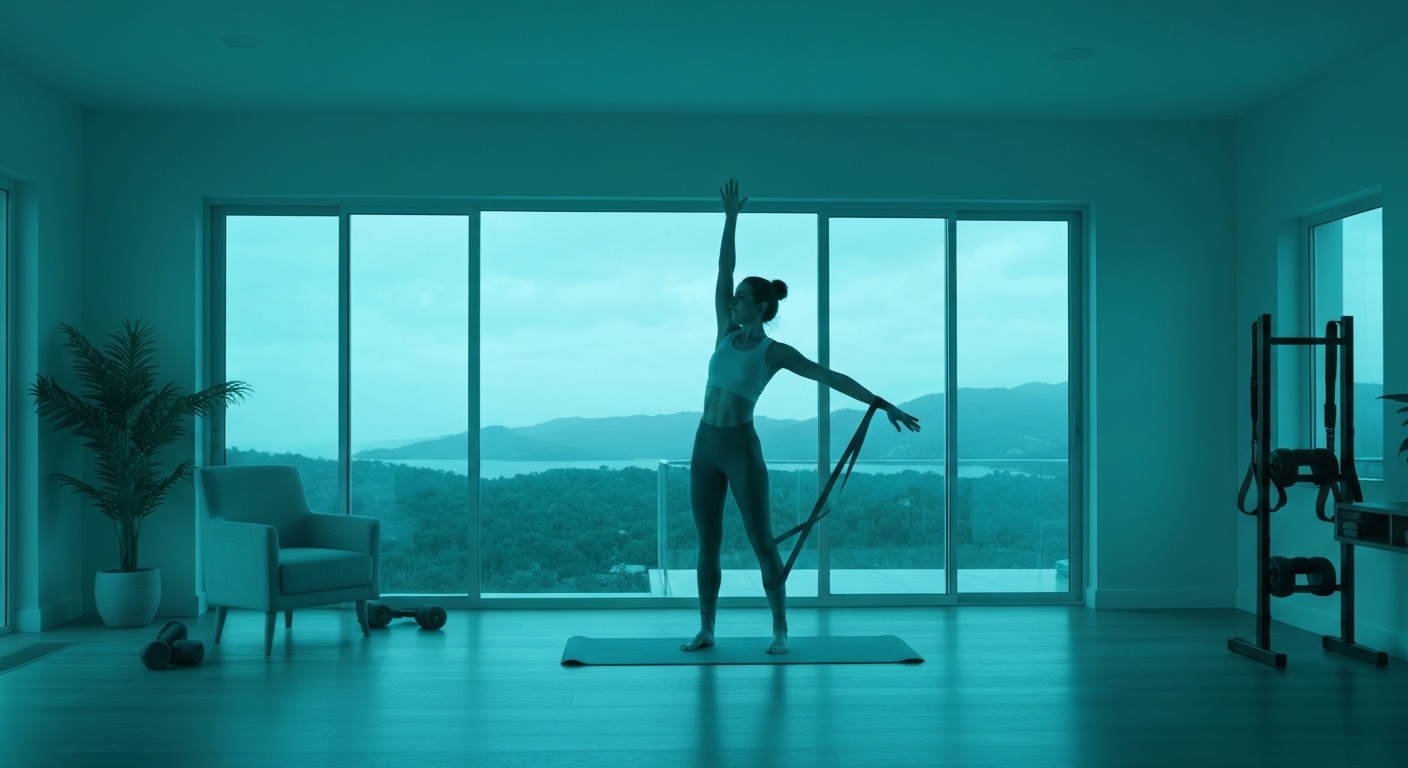
You don't need a professional gym. A clear space in the living room, a mat, and comfortable clothing are enough. The key to a home routine is to eliminate friction: if you have to move furniture for half an hour to start, you probably won't do it.
Practical Routine to Start Today
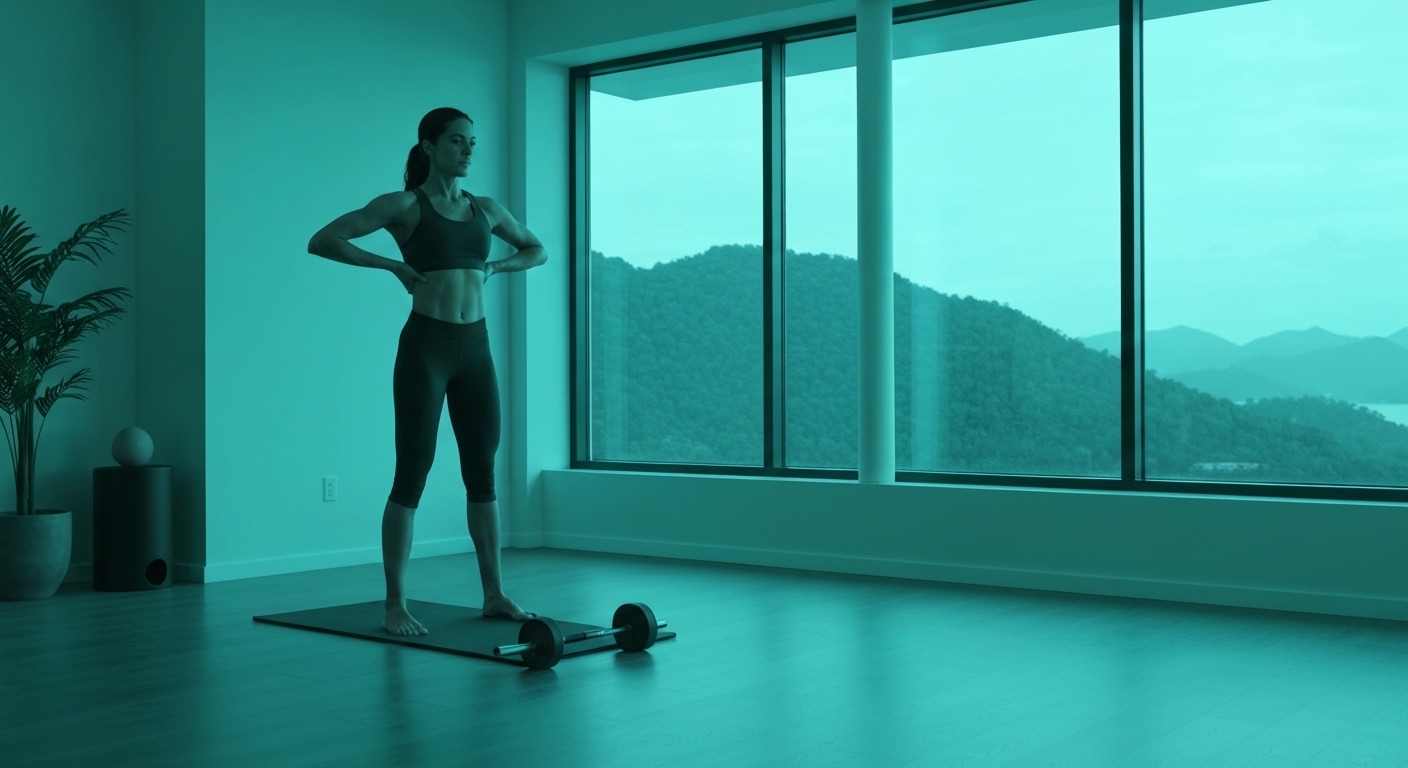
This routine is designed to be completed in about 25 minutes, without the need for additional equipment, focusing on large muscle groups to maximize efficiency.
Phase 1: Warm-Up (5 minutes)
- Neck, shoulder, and wrist rotations (1 minute).
- Marching in place while gently raising knees (2 minutes).
- Hip circles and gentle trunk twists (2 minutes).
Phase 2: Main Block (15 minutes)
Perform 3 rounds of the following exercises, resting 45 seconds between each:
- Controlled Squats: 12 repetitions. Imagine sitting in an invisible chair, keeping your back straight.
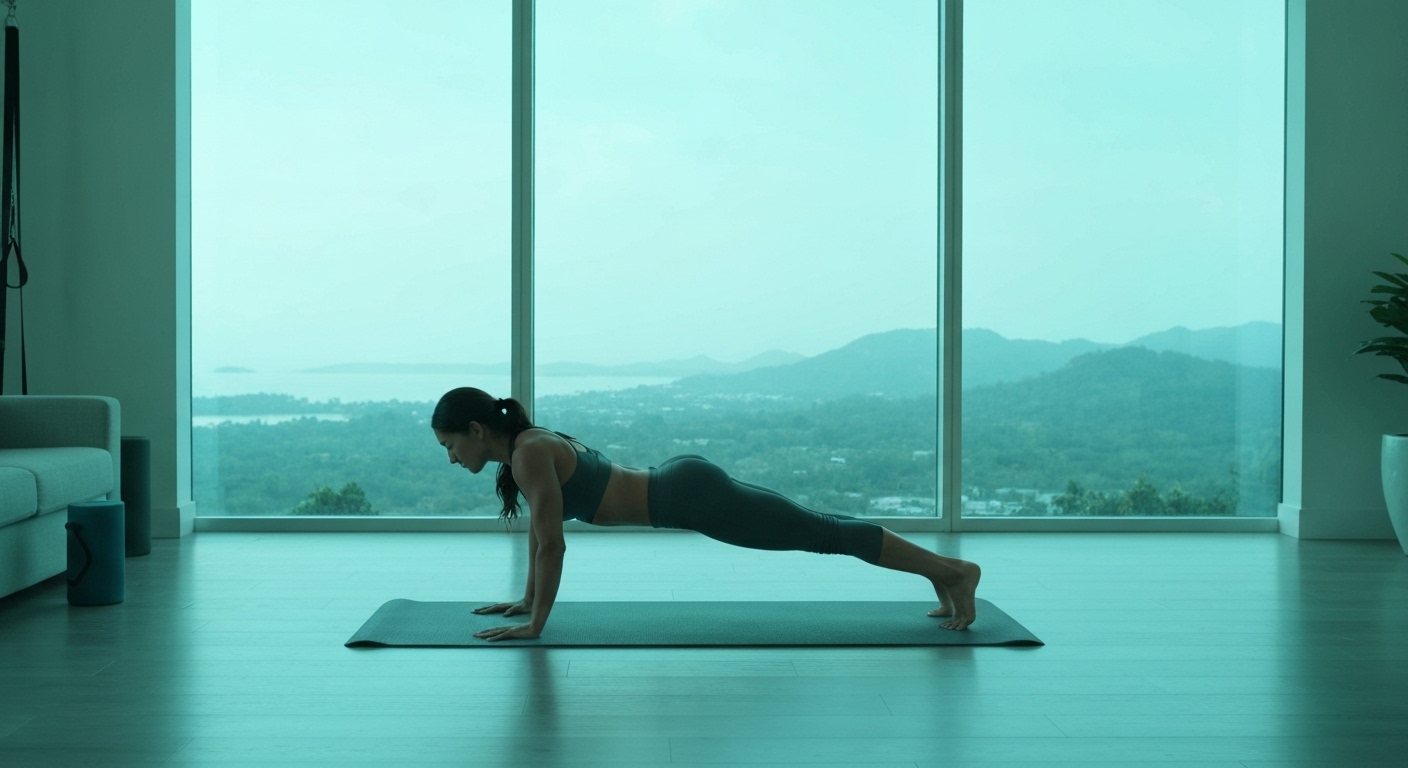
- Wall or Knee Push-Ups: 10 repetitions. Focus on lowering your chest with control.
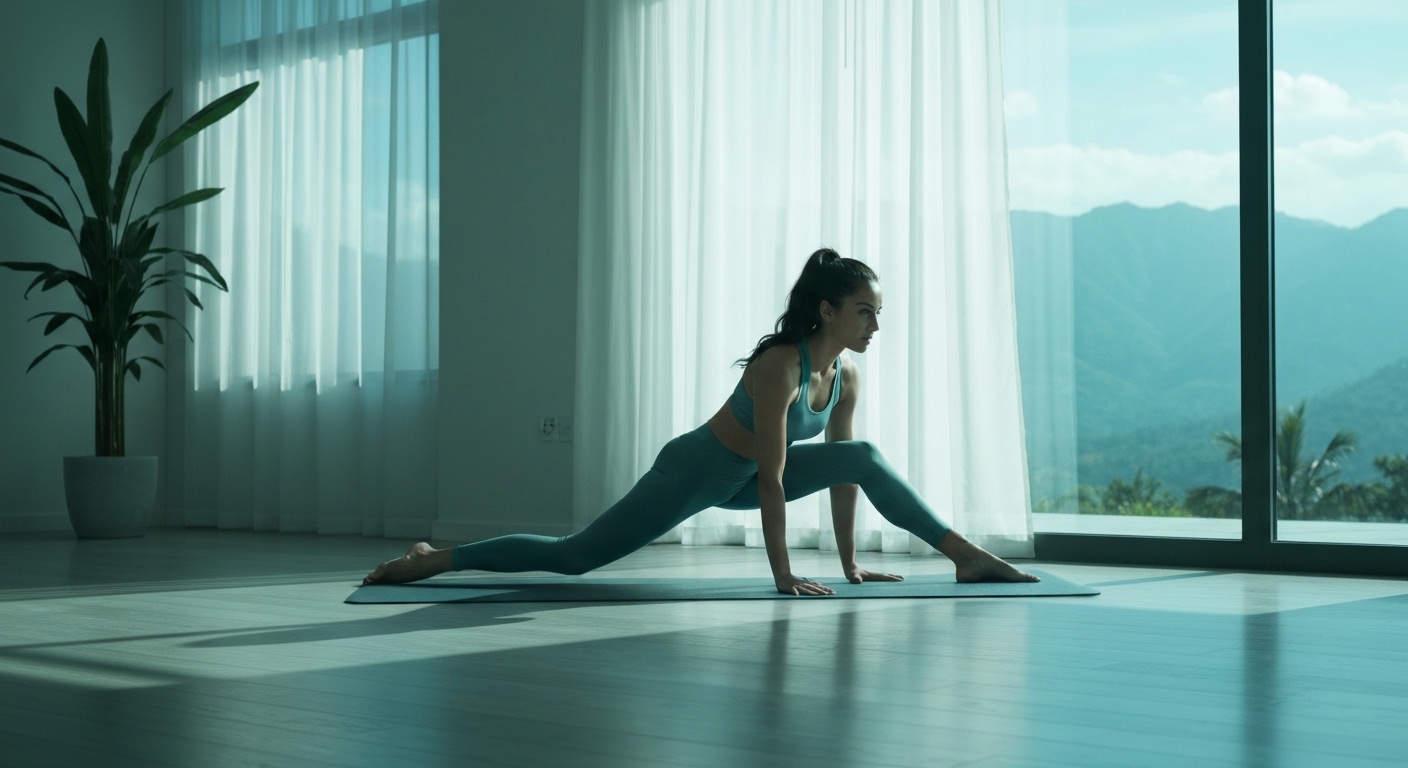
- Alternating Lunges: 10 repetitions per leg. Step forward and lower the back knee without letting it touch the ground.
- Plank (Core): Hold the position for 20 to 30 seconds, keeping your body aligned.
Phase 3: Closure and Cool Down (5 minutes)
- Leg stretches (hamstrings and quadriceps).
- Arm and back stretches (child's pose).
- Deep diaphragmatic breaths to lower your heart rate and relax your nervous system.
Keys to Maintaining Long-Term Motivation
Motivation is volatile; discipline and system are permanent. For your exercise organization to be effective, consider these practical tips:
- Listen to Your Body: If one day you feel extremely exhausted, swap the intense routine for 10 minutes of stretching. The important thing is not to break the habit chain.
- Track Your Progress: Don't focus solely on weight. Notice how you feel: do you have more energy? Do you sleep better? Do you climb stairs with less fatigue?
- Seek Enjoyment: Play your favorite music or a podcast you like. Exercise should be a moment of self-care, not a punishment.
Frequently Asked Questions about Home Exercise
Yes. For beginners, body weight provides enough resistance to improve muscle tone, cardiovascular health, and flexibility, as long as there is consistency.
Nothing serious. Well-being is a long journey. Pick it up the next day without feelings of guilt or attempts to compensate with double exercise, which could lead to injuries.
It's not strictly necessary at the beginning. You can use everyday objects like water bottles or simply your own body weight, which is the most versatile tool you have.
Explore more about how to improve your quality of life in our related articles:
Activa tu bienestar hoy
Empieza con una rutina sencilla y construye el hábito paso a paso.