
 Colombia
 México
 Italia
 Francia
 Alemania
💪 Home Exercise Routine for Beginners: A Practical and Realistic Guide

The Challenge of Starting: Beyond Intent
Many of us have been there: Monday arrives, and we promise ourselves that this time we will start moving. However, lack of time, exhaustion after a tiring workday, or the idea that we need an expensive gym end up holding us back. Sedentary behavior is not just a lack of willpower; it is often the result of an environment that does not facilitate movement. Home exercise for beginners emerges as the most logical and sustainable solution to break this cycle.
The real problem is not the lack of exercises on the internet, but the overload of information. Trying to follow routines of professional athletes when we are just getting back into physical activity is a recipe for frustration and injuries. For the habit to stick, it must be easier to do than to ignore. In this article, we will break down how to build a solid foundation of physical well-being from the comfort of your living room, without aesthetic pressures and with a 100% functional approach.
Why Choose Home Exercise?
Training at home eliminates logistical barriers. There are no commutes, no imposed schedules, and no social pressure of feeling watched. For a beginner, privacy is a valuable asset that allows concentration on technique and the sensations of one's own body. Moreover, a home routine without equipment demonstrates that body weight is the most versatile tool we possess.
From a holistic well-being perspective, daily movement helps regulate cortisol levels (the stress hormone), improves sleep quality, and enhances mental clarity. It is not just about burning calories, but reminding our nervous system that we are active and capable.
Preparing the Ground: Less is More
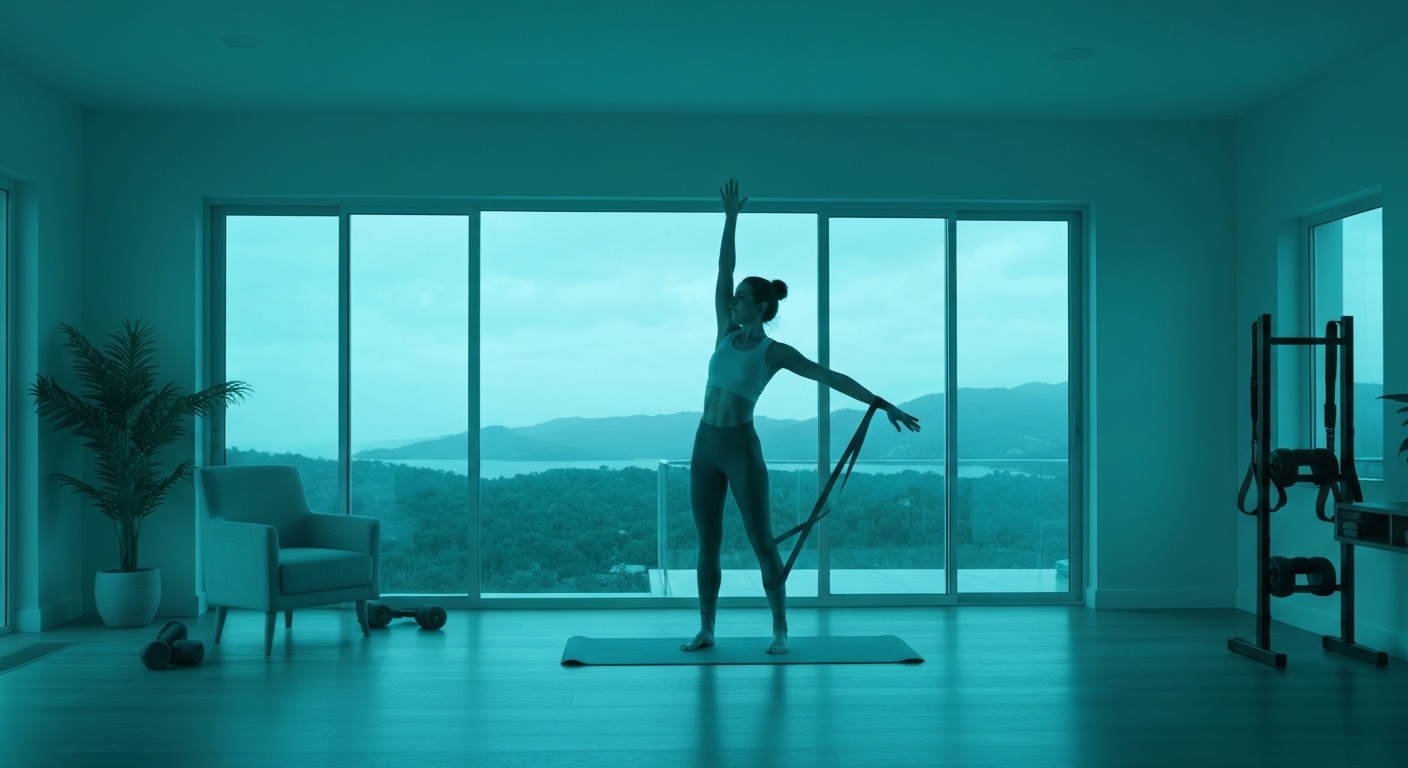
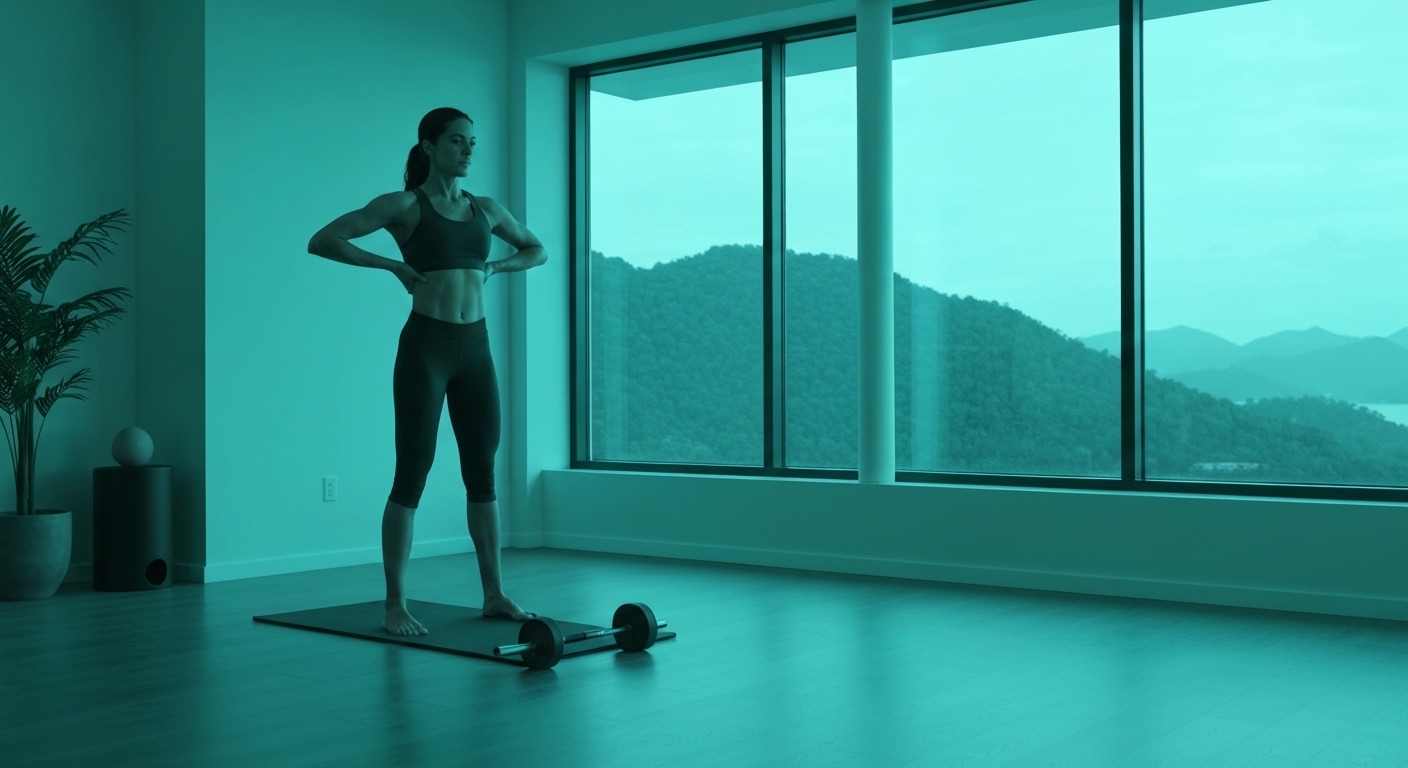
Before you dive into sweating, it is essential to prepare the environment. You don't need a dedicated fitness room; a space of two square meters is sufficient. Ideally, it should be a well-ventilated place with natural light if possible. When it comes to clothing, prioritize comfort over brand. If you are going to train barefoot, make sure the surface is not slippery; a rug or a basic yoga mat can help.
A vital tip for easy daily exercise is mental preparation. Set a fixed schedule, but be flexible. If one day you don't have 30 minutes, do 10. The key to sustainability is consistency, not perfection. It is preferable to train three times a week consistently than to have an intense two-hour session and not move again for fifteen days.
Practical Routine to Start Today
This routine is designed to be performed in any corner of your home. It requires no weights or machines, just your willingness and a little water to hydrate.
1. Warm-Up (5 minutes)
The goal is to raise your body temperature and prepare your joints. Perform each movement for 60 seconds:
- March in place: Walk without moving, lifting your knees to a comfortable height.
- Shoulder and arm rotation: Large circles forward and backward.
- Hip mobility: Gentle circles with the pelvis as if using a hula-hoop.
- Gentle torso twist: With your feet fixed, rotate your torso side to side.
2. Main Activity (15-20 minutes)
Perform 3 sets of this circuit. Rest for 45 seconds between each exercise and 2 minutes between sets.
- Assisted Squats (12 repetitions): Use a stable chair. Sit down and stand up while controlling the movement. Keep your back straight and weight on your heels.
- Wall Push-Ups (10 repetitions): Place your hands on the wall at shoulder height. Lean your body and push. This is the safest version to protect shoulders and back at the start.
- Alternating Lunges (10 repetitions per leg): Step forward and lower the back knee towards the ground. If you lose balance, support yourself on a table or wall.
- Kneeling Plank (20-30 seconds): Support your forearms and knees on the ground. Keep your body aligned from head to knees, engaging your core.
3. Cool Down and Stretch (5 minutes)
Do not stop abruptly. Allow your heart rate to gradually decrease:
- Hamstring Stretch: Sitting on the floor, stretch one leg and try to reach the ankle without forcing.
- Chest Stretch: Open your arms in a cross and gently pull them back.
- Deep Breathing: Take 5 deep breaths in through your nose and exhale slowly through your mouth, closing your eyes.
Tips to Stick to Your Basic Training Plan
Motivation is the initial spark, but discipline is the engine. For your basic training plan to be successful, avoid comparing yourself to people who have been training for years. Your only competition is your version from yesterday. Listen to your body: it is normal to feel slight muscle discomfort (soreness) at first, but sharp pain is a sign that you should stop and check your technique.
Another crucial factor is hydration. Drink water before, during, and after the routine. You don't need sugary sports drinks; plain water is your best ally. Finally, celebrate small achievements: completing your first week, achieving one more push-up, or simply feeling more energetic in the mornings.
Frequently Asked Questions (FAQ)
The ideal is to start with 3 sessions per week, leaving a rest day between them for muscle recovery. As you gain fitness, you can increase to 4 or 5 days.
No, not at first. Your own body weight provides enough resistance to strengthen muscles and improve cardiovascular health. Later on, you can use everyday objects like water bottles or a backpack with books.
If the pain is sharp or localized in a joint, stop immediately. Check your posture in front of a mirror. If the pain persists, consult a wellness professional or physiotherapist before continuing.
Explore more about how to improve your quality of life in our related articles:
Activa tu bienestar hoy
Empieza con una rutina sencilla y construye el hábito paso a paso.